

12
What Are Active Safety Features in Cars and How Do They Keep You Safe?

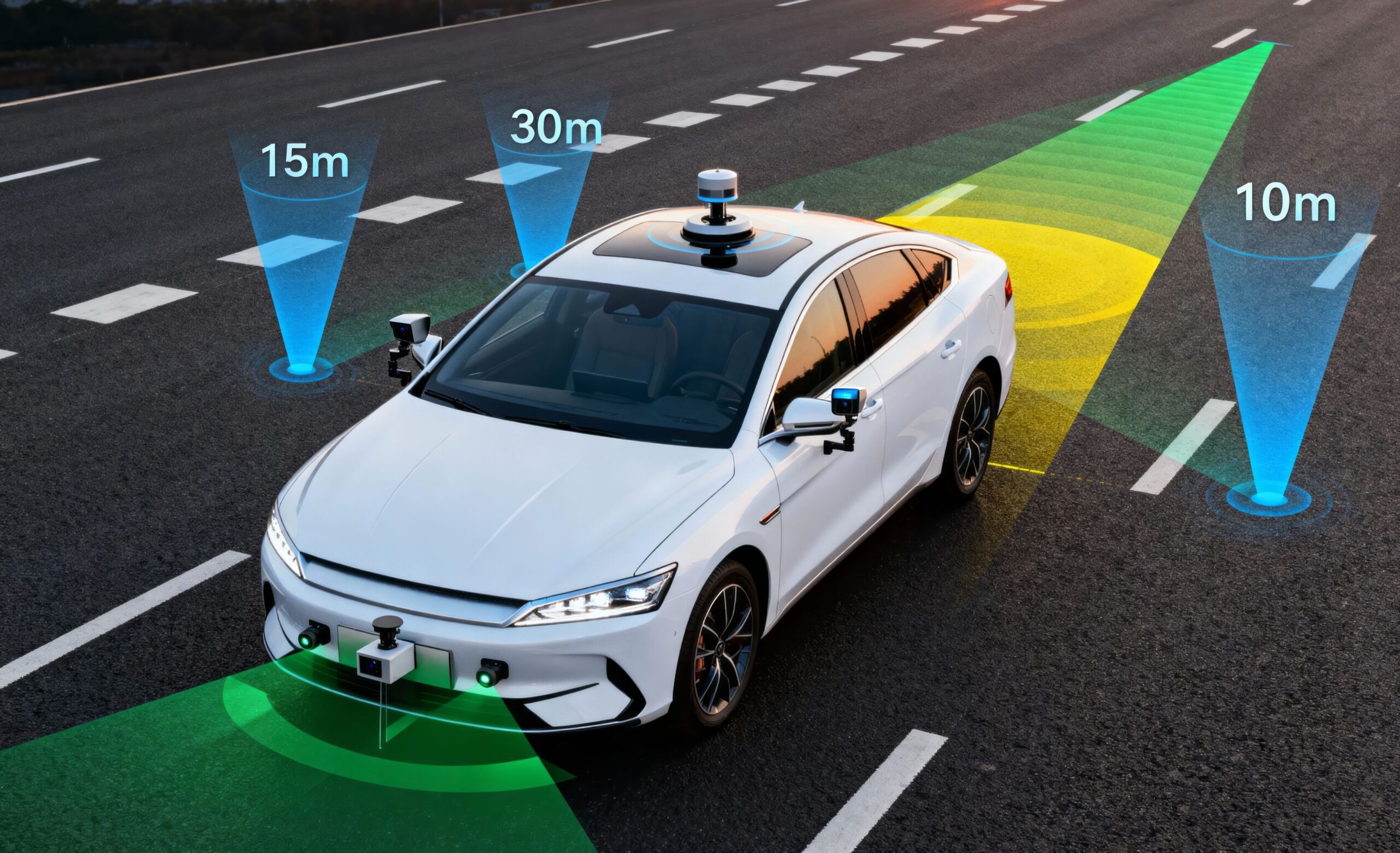
Over the last decade, car buyers in India have begun to evaluate vehicles not only for performance but also for safety.
Although airbags remain relevant, they are passive devices that deploy after a collision. Active systems operate continuously while the vehicle is moving and are designed to prevent collisions. As a result, modern car safety features focus on accident avoidance rather than post-impact protection.
Most people know how the windshield provides structural stability to the vehicle, but knowing the active safety features and their dependence on the windshield in some cases is crucial.
Traditional vs Modern Active Safety Features
Active safety technologies can be broadly divided into traditional mechanical-electronic systems and modern sensor-based assistance systems.
Traditional systems operate on driver input and on correcting mechanical imbalance during braking, steering or acceleration. Together, these systems form a layered network of car safety features that strengthen overall driving stability.
Traditional Active Safety Features
1. ABS (Anti-lock Braking System)
ABS prevents wheel lock during heavy braking by regulating hydraulic pressure at each wheel. Wheel speed sensors detect rapid deceleration, which signals impending lockup conditions. The ABS control module then activates solenoid valves to repeatedly cycle braking pressure.
2. EBD (Electronic Brakeforce Distribution)
EBD works alongside ABS and redistributes braking force depending on weight transfer and available grip. During cornering or sudden deceleration, load shifts between axles can alter traction levels. EBD analyses wheel speed data and adjusts hydraulic pressure accordingly.
3. BA (Brake Assist)
Brake Assist identifies emergency braking attempts by analysing brake pedal application speed and force. Many drivers fail to apply sufficient pressure during panic situations. The system compensates by instantly increasing braking force to achieve maximum deceleration.
4. TC (Traction Control)
Traction Control prevents excessive wheel spin during acceleration by comparing the speeds of driven and undriven wheels. If a slip is detected, the engine control unit reduces torque or applies selective braking.
5. ESP (Electronic Stability Program)
ESP maintains the vehicle path during abrupt manoeuvres by comparing the intended steering input with the vehicle's actual motion. The steering angle sensors determine the direction the driver intends to turn, and the yaw rate sensors measure the rate of change of heading.
6. HHA (Hill Hold Assist)
Hill Hold Assist prevents rollback by maintaining a temporary brake pressure. Incline sensors detect road gradient while wheel sensors confirm the vehicle remains stationary. When the brake pedal is released, braking force is briefly retained.
7. Hill Descent Control
Hill Descent Control helps drivers descend steep hills at a controlled speed. When activated, it automatically controls braking and engine torque to stabilise the vehicle.
8. TPMS (Tyre Pressure Monitoring System)
TPMS measures tyre pressure either by direct pressure sensors or indirect rotational analysis. Incorrect tyre pressure impacts grip, braking and fuel consumption. By alerting drivers early, TPMS helps avoid instability that may undermine other car safety systems.
Modern Active Safety Features
1. Forward Collision Warning (FCW) and Auto Emergency Braking (AEB)
FCW calculates the closing speed between your vehicle and obstacles ahead using radar and camera data. Visual and audio alerts are triggered when collision probability increases. If the driver does not react in time, AEB automatically activates the braking hardware integrated with ABS.
2. Lane Departure Warning (LDW) and Lane Keep Assist (LKA)
LDW monitors lane markings using a front-facing camera and recognises unintended drift. There are instrument cluster warnings and steering feedback. If the driver does not correct, LKA slightly adjusts steering torque to return the vehicle to its lane.
3. Blind Spot Collision Warning (BCW) and Blind Spot Collision Avoidance (BCA)
Blind-spot monitoring systems use rear radar sensors mounted near the bumper corners. When a vehicle occupies the blind zone, warning indicators illuminate on the side mirrors. If a lane change continues despite a warning, BCA may apply corrective steering or braking input.
4. Rear Cross Traffic Warning (RCTW) and Rear Cross Traffic Avoidance (RCTA)
Radar sensors detect cross-traffic on both sides when reversing out of parking spaces. RCTW issues audio and visual warnings when movement is detected. If the driver's reaction is slow, RCTA automatically applies the brakes to avoid a collision.
5. Driver Drowsiness Alert (DDA)
Driver monitoring systems evaluate steering consistency, throttle input and braking patterns over time. Irregular driving behaviour combined with extended driving duration may indicate fatigue. Alerts prompt the driver to take a break before concentration levels decline further.
6. Safe Exit Warning (SEW) and Safe Exit Assist (SEA)
Rear-mounted sensors monitor approaching vehicles or cyclists when the car is stationary. If a passenger attempts to open a door during approaching traffic, warning signals are triggered. In high-risk situations, SEA temporarily prevents door opening until the path is clear.
Conclusion: The Role of the Windshield in Active Safety Systems
Many modern assistance systems rely on cameras mounted behind the windshield to operate accurately. Even minor distortion or improper installation can interfere with sensor calibration and system performance.
This makes timely car windshield replacement essential when cracks or structural damage appear. AIS Windshield Experts provides quality car windshield replacement services with OEM-grade glass and an accurate installation process to guarantee correct sensor calibration.
Frequently Asked Questions
What are active safety features in cars?
Active safety features are technologies that monitor the road and the vehicle's surroundings to avoid collisions by braking, steering, or engine control.
What is the difference between active and passive systems in cars?
Active systems prevent accidents through intervention, while passive systems protect occupants during impact through airbags and seatbelts.
Are active safety features mandatory on cars in India?
Certain systems, such as ABS, are legally mandatory, while advanced assistance systems depend on vehicle segment and manufacturer offerings.
Is ADAS an active safety feature in cars?
Yes, ADAS technologies fall under active safety features.
Are active safety features better than passive safety features in a car?
Both systems are essential: active systems prevent accidents, and passive systems reduce injury severity in unavoidable collisions.
Similar Post
-
31

How Rain-Sensing Wipers Can Misbehave During Heavy Monsoon Conditions
-
31
The Hidden Impact of Mud Splash on ADAS Camera Accuracy
-
31

Why Sudden Temperature Changes During Rainfall Affect Windshield Durability
-
31

How Rainwater Mixed With Road Oil Affects Windshield Clarity
-
31

How Monsoon Construction and Road Maintenance Activities Affect Windshield Safety
Recent Post
- How Monsoon Road Debris Increases the Need for Windshield Repair
- How Rain-Sensing Wipers Can Misbehave During Heavy Monsoon Conditions
- The Hidden Impact of Mud Splash on ADAS Camera Accuracy
- Why Battery Jump-Start Requests Increase During the Monsoon Season
- Why Frequent Defogger Usage Can Reveal Battery Weakness?
Blog Categories
 9818866364
 9599087715
 Insurance Claim


 1800-102-6364
  9818866364
  9599087715